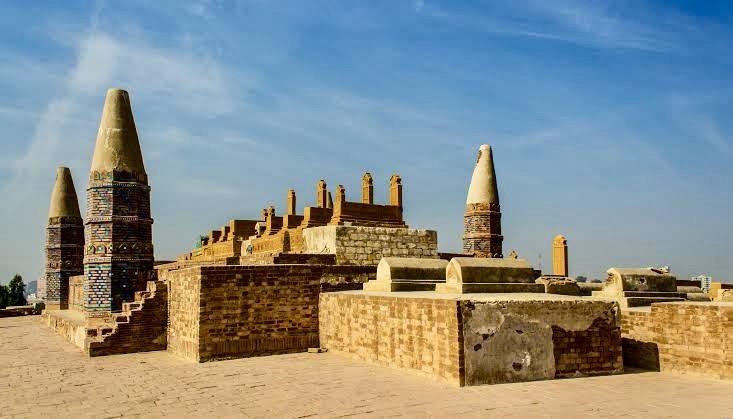

Sateen Jo Aastan, often referred to as the “Tomb of the Seven Sisters,” stands as a magnificent, yet tranquil, historical site on the left bank of the majestic Indus River, near the town of Rohri in Sindh, Pakistan. This site is a rare blend of captivating local folklore and profound historical significance, drawing both pilgrims and history enthusiasts to its ancient, tile-adorned grounds .
The Enduring Whisper of the Seven Sisters
The name “Sateen Jo Aastan” (The Resting Place of the Seven) is rooted in one of Sindh’s most poignant local legends. The folklore tells of seven beautiful and highly devout unmarried sisters who lived in strict adherence to purdah, a tradition of female seclusion.
The peace of their reclusive lives was shattered when a powerful, tyrannical local ruler heard of their unparalleled beauty. Driven by desire, he commanded his men to bring the sisters before him. Fearful of the ruler’s intentions and determined to protect their honor and piety, the sisters offered a heartfelt prayer for divine intervention.
As the story goes, the earth itself responded to their plea. The ground beneath them miraculously opened up, swallowing the seven sisters whole, protecting them from the tyrant forever. The site, therefore, is revered as the sanctified burial spot of these virtuous women who chose disappearance over dishonor. This powerful narrative of faith and courage continues to inspire and draw thousands of visitors.
A Royal Tomb of the Mughal Era
While the folklore provides the romantic appeal, the site’s historical significance lies in its role as a royal necropolis. The principal tomb belongs to Mir Abu Al-Qasim Namkeen, a distinguished ruler and administrator of Sukkur who passed away in 1553 during the reign of the Mughal Emperor Humayun.
Mir Abu Al-Qasim himself commissioned the construction of this grand complex. His tomb, along with that of his son, forms the historical heart of Sateen Jo Aastan. The broader site is filled with numerous other graves, dating primarily from the 17th to the 19th centuries, offering a valuable glimpse into the funerary architecture and traditions of the region during the later Mughal and Kalhora periods.
Architectural Beauty and Features
The architectural features of Sateen Jo Aastan are a testament to the skilled craftsmanship of the era:
• Decorative Graves: Many of the graves are noted for their intricate design, featuring beautiful decorative tile work.
• Inscriptions: The stonework and tiles are often adorned with elegant Arabic quotations and calligraphy, adding a layer of scholarly and spiritual beauty to the surroundings.
• The Complex: In addition to the tombs, a small mosque is also situated on the property, providing a quiet space for prayer and further cementing the site’s role as a place of spiritual importance.
Its location, perched right on the bank of the mighty Indus River, enhances the serene and timeless quality of the monument, making it a popular destination for both international tourists and local families seeking a moment of peace and a connection to a deep, layered history.
Sateen Jo Aastan is more than just a burial ground; it is a cultural touchstone where the human desire for piety and freedom is immortalized alongside the legacy of powerful rulers. It serves as a beautiful reminder of how local mythology and documented history can coexist, enriching the identity of the land they share.