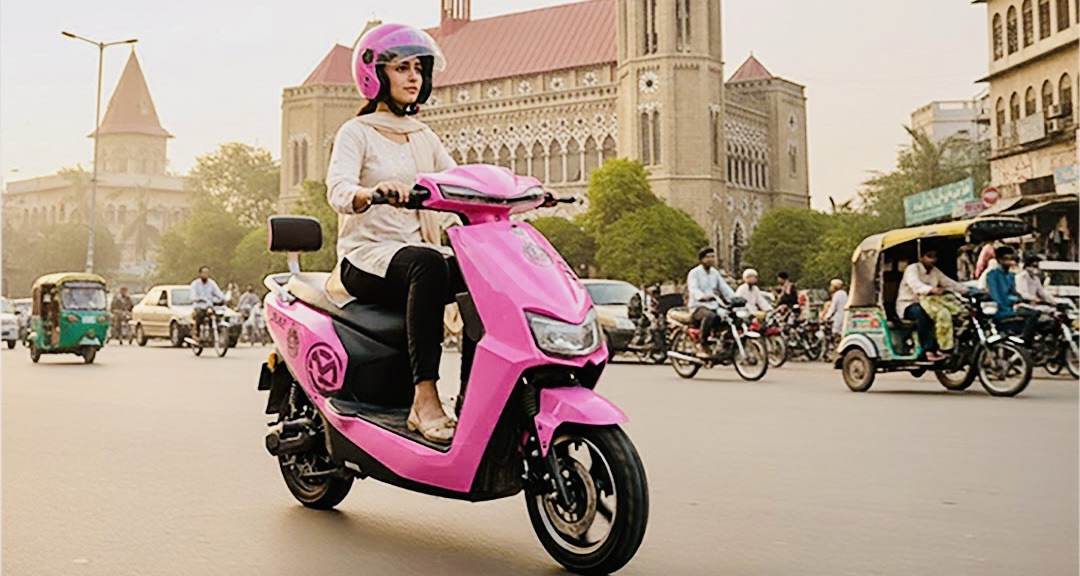

In a bold move to protect the spirit of women’s empowerment, the Sindh Provincial Government has issued a strict warning against men using the pink electric scooters introduced under its women’s mobility initiative. Officials confirmed that any male or male family member found riding the scooters will face immediate impoundment and penalties, reinforcing the project’s exclusive purpose: empowering women through independence and mobility.
The Pink Scooter Project — Driving Women’s Independence
The Pink Scooter Project, launched by the Sindh Mass Transit Authority (SMTA), aims to enable female students and working women to commute freely, safely, and sustainably across Sindh’s urban centers.
Under the first phase, 200 electric scooters have already hit the roads in Karachi and surrounding districts, with an additional 725 scooters set to follow. These electric scooters are part of a broader government strategy to promote eco-friendly mobility and gender inclusion.
But there’s a clear condition — only women can ride them. The government has made it plain that even borrowing the scooter “just for a quick spin” will lead to penalties and confiscation.
Officials Stand Firm on Policy
SMTA’s Managing Director Kanwal Nizam Bhutto emphasized the purpose behind the move:
“If male relatives start using the pink scooters, the very purpose of women’s empowerment will be defeated.”
The Sindh Government maintains that allowing men to misuse the scheme contradicts its goal of helping women build confidence, visibility, and independence on the road.
A Crash Course on the Rules
Only the registered female beneficiary may operate the scooter. A two-wheeler driving licence (or learner’s permit) is mandatory. An official registration number plate is required. Helmet usage is compulsory. Unauthorized transfer or sale of the scooter will invalidate its ownership.
The beneficiaries also undergo comprehensive training in traffic laws, scooter control, and safety before being allowed to ride—underscoring the Sindh Government’s commitment to responsible and secure mobility for women.
More Than a Scooter — A Step Toward Equality
This initiative represents more than just transportation—it’s a social shift toward women’s economic participation, safety, and autonomy. By setting clear boundaries and enforcement measures, the Sindh Government is ensuring that empowerment isn’t diluted or misused.
“This program is not about distributing scooters—it’s about giving women the freedom to move, work, and live independently,” a Sindh government spokesperson remarked.
As the government expands the program in upcoming phases, the message remains clear: the Pink Scooter is a symbol of women’s empowerment, not a shared household vehicle.
Men tempted to test the pink wheels might want to think twice—the rules are clear, and enforcement is real.